
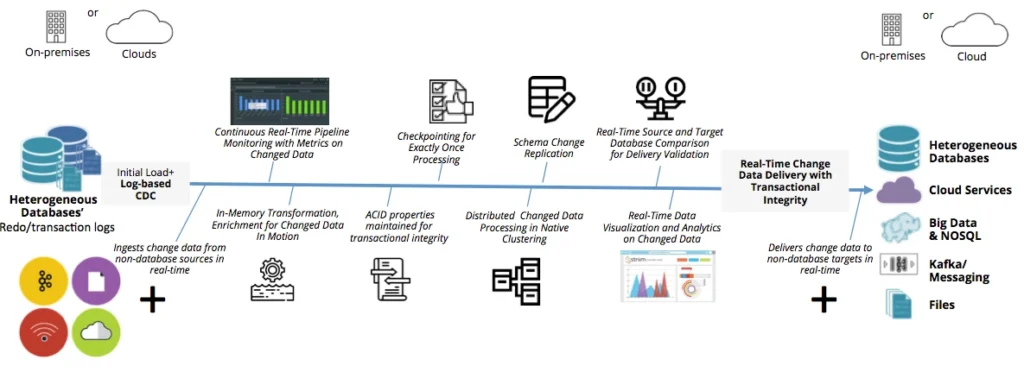
Learning how to become a data scientist requires a radical departure from legacy learning roadmaps that rely purely on basic statistical theory and local spreadsheet calculations. As modern software infrastructures integrate autonomous data agents, real-time transformer streaming, and low-code visualization endpoints, the baseline barrier to entry has evolved. If you spend months simply memorizing mathematical syntax without understanding how to deploy production-grade pipelines, you will find yourself completely locked out of tomorrow’s analytics industry.
Following an obsolete, unoptimized training roadmap will leave you stranded with fragmented coding skills, unvetted portfolios, and application scripts that fail enterprise scale benchmarks.
To help you break through the noise and establish a competitive technical edge, this step-by-step master tutorial unrolls the definitive modern playbook on how to become a data scientist. We skip the academic fluff to focus directly on actionable skill acquisition, framework integration, and automated workflow strategies that corporate engineering teams look for.
The Applied Lifecycle of a Modern Data Pipeline
To build an elite career in analytics, you must first master the cyclical journey data takes from raw state to machine intelligence. You are no longer just an analyst; you are an information architect.
The modern data lifecycle demands that you understand how to interface with live infrastructure. You must know how to pull structured or unstructured data pools out of remote servers, sanitize and parse that raw text using programmatic string rules, feed the refined vectors into local machine learning frameworks, and ultimately host your working system arrays inside robust cloud containers for business stakeholders to access seamlessly.
Step 1: Master High-Velocity Data Manipulation with Python and SQL
The absolute starting point of your data journey is establishing baseline fluency in programming languages that handle data manipulation natively. Python remains the unmatched king of algorithmic engineering, while SQL serves as the foundational key to unlocking relational databases.
Actionable Tutorial Benchmarks:
- Learn to write clean Python scripts using data arrays inside Pandas and numerical matrixes inside NumPy.
- Master core database queries using
SELECT,JOIN,GROUP BY, and database subqueries inside PostgreSQL or MySQL.
When dealing with massive unstructured datasets or streaming logs, a core portion of your daily engineering workflow will involve cleaning up messy string variables. Rather than handling this sequentially, you must write optimized text filtering logic. To jumpstart this skill set, consult our comprehensive Python Regex Tutorial to build resilient, blazing-fast pattern matching frameworks that cleanly scrub your input data arrays.
Step 2: Build Production-Grade Data Sanitization and Text Processing Pipelines
Once you can query databases, you will quickly discover that real-world business data is incredibly messy, incomplete, and unstructured. The difference between a junior applicant and a professional data scientist is the ability to independently build automated sanitization pipelines.
Actionable Tutorial Benchmarks:
- Learn to handle missing data fields dynamically through systematic imputation or programmatic dropping.
- Understand how to normalize skewed numerical distributions and convert categorical text variables into binary machine-readable formats.
import pandas as pd

def clean_unstructured_payload(raw_dataframe):
    # Standardize data entry strings by removing whitespace and lowercasing
    raw_dataframe['clean_text'] = raw_dataframe['raw_text'].str.strip().str.lower()
    # Impute missing feature values safely without breaking adjacent matrix structures
    raw_dataframe['metrics'].fillna(raw_dataframe['metrics'].median(), inplace=True)
    return raw_dataframe
If you find yourself handling complex text scraping pipelines or cleaning up character encodings across dirty datasets, look at our practical guide on [Text Processing in Python](https://pragmabrain.com/text processing-in-python) to learn how to rapidly transform raw, messy paragraphs into beautiful, structured data assets. Furthermore, if you are extracting data trapped within physical invoices, receipts, or PDF reports, master the workflows in our Image to Text Conversion Using Python guide to implement Optical Character Recognition (OCR) directly inside your processing stacks.
Step 3: Implement Core Machine Learning and Mathematical Modeling
With clean data arrays secured, your next step in learning how to become a data scientist is training models to predict trends, classify objects, and uncover hidden business insights.
Actionable Tutorial Benchmarks:
- Master classic supervised algorithms: Linear Regression, Logistic Regression, Decision Trees, and Random Forests.
- Explore unsupervised clustering techniques like K-Means to segment customer profiles without labeled targets.
- Utilize Scikit-Learn as your primary modeling workbench before scaling to deep learning neural networks.
As you build out these algorithmic workflows, you will quickly realize that writing code syntax is only half the battle. To keep your productivity levels exceptionally high, learn how to pair your local IDE with advanced pair programmers by following our expert evaluations of the Best AI Coding Assistants to streamline your debugging, accelerate script composition, and automate unit tests.
Step 4: Leverage Next-Gen Low-Code Frameworks for Rapid Prototyping
While writing raw code from scratch is an invaluable skill, modern tech teams move fast. To thrive in an agile business environment, you must learn to leverage low-code visualization suites and rapid deployment sandboxes to prototype apps instantly.
Actionable Tutorial Benchmarks:
- Master data visualization tools like Tableau Public or PowerBI to map business patterns clearly.
- Learn to wrap your Python models inside interactive web frameworks like Streamlit or Gradio so non-technical users can interact with your machine learning systems.
To understand how visual app builders can dramatically accelerate your analytical workflow and help you spin up internal executive dashboards overnight, take a deep look at our comprehensive review of the Best Low-Code Platform Reviews space to learn how to maximize your deployment velocity.
Step 5: Deploy Your Portfolio Models to Free Cloud Infrastructure
The final hurdle on your road map is making your work visible to the world. A GitHub repository full of raw code files is excellent, but a live, accessible web portfolio that recruiters can click on and play with will immediately set you apart from thousands of competing applicants.
Actionable Tutorial Benchmarks:
- Learn the basics of Git version control to manage repositories seamlessly.
- Containerize your analytical web apps using Docker.
- Host your operational pipelines on zero-cost cloud sandboxes so they run continuously on the web.
To launch your projects onto the web without running up expensive corporate server bills, browse our curated resource matrix of Free Developer Tools Hosting environments. This ensures you can seamlessly deploy your live portfolio dashboards, host custom prototype APIs, and showcase your machine learning systems completely out-of-pocket.
Operational Guide: Your 6-Month Learning Velocity Roadmap
To pace your engineering journey effectively as you execute this tutorial layout on how to become a data scientist, consult this technical timeline milestone matrix:
| Milestone Phase | Primary Technical Focus | Core Framework Stack | Key Portfolio Deliverable |
| Month 1–2 | Foundations & Extraction | Python, SQL, PostgreSQL | Relational schema query & clean dataset asset |
| Month 3 | Processing & Sanitization | Pandas, NumPy, Regular Expressions | Automated text processing & clean ingestion pipeline |
| Month 4 | Statistical Modeling | Scikit-Learn, Statsmodels | Predictive regression tool or classification agent |
| Month 5 | Visual Prototyping | Streamlit, Plotly, Tableau | Interactive analytical dashboard app web app |
| Month 6 | Deployment & Architecture | Git, Docker, Free Cloud Tiers | Live web-hosted portfolio system running online |
To track how global technology boards and data engineering consortiums standardize analytical roles, pipeline certifications, and data governance practices across the enterprise space, monitor the live updates published directly on the Official IEEE Computer Society platform to see how technical demands are evolving this year.